HealthcareMobile App
Healthcare
Case StudyDoctor Appointment Booking App
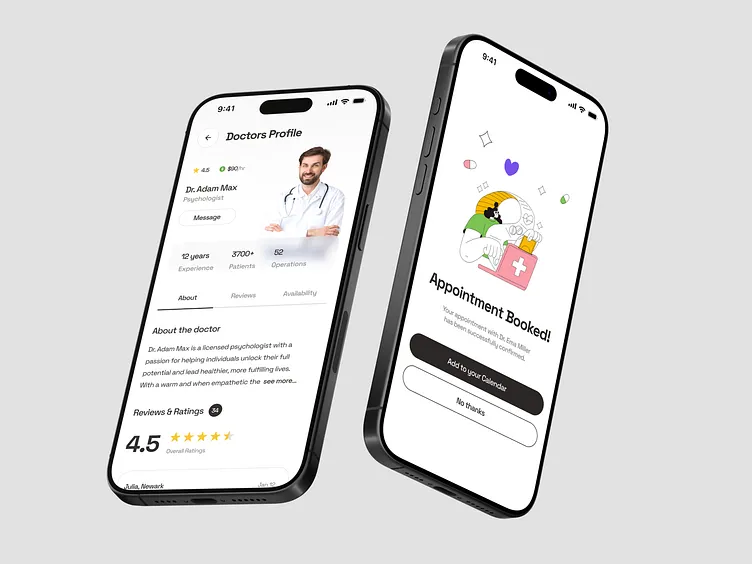
A healthcare appointment platform with doctor profiles, slot booking, patient records, reminders and admin scheduling.
HealthcareSlotsDoctors
Mobile App project
View Details
Loading your page
Please wait a moment...
Explore Cyber Impulse Software Solutions projects across websites, mobile applications, ERP platforms, dashboards, IoT solutions, AI/ML systems and custom business software.
View the Cyber Impulse company portfolio online or download the PDF for later reference. Online viewing opens instantly in a new tab; only the download asks for your name, email and phone number.
Search by project name, industry or technology. Filter by mobile apps, websites, ERP, AI/ML, IoT and custom software. Each card opens a detailed SEO case-study page.
This section gives visitors clarity before contacting Cyber Impulse: what can be built, how the product works, what screens are needed and what can be connected later.
Frontend now, dynamic backend later
Perfect for finalizing design, colors, content and SEO flow before connecting APIs and admin panel.
Define users, business model, product modules, screens, roles and content direction before UI development starts.
Customer app, provider app, booking flow, order flow, checkout, notifications and history screens are planned clearly.
SEO landing pages, service sections, listing pages, detail pages, lead forms and conversion-focused CTAs.
Dashboards, records, users, statuses, reports, categories, permissions and business operation controls.
Project storytelling, SEO metadata, FAQs, analytics-ready sections and business visibility through clean content.
Static frontend can later connect with APIs, database, authentication, CMS, cloud storage and admin-managed content.
Featured case studies show how Cyber Impulse can plan apps, web portals, dashboards, ERP systems and backend-ready software ecosystems from idea to launch.
Right now it is static for frontend approval. Later, the same structure can become dynamic with backend APIs, admin panel, pagination and category-wise project management.
Projects can be stored in backend with title, slug, category, industry, tags and SEO metadata.
Main page can show latest six projects while archive page uses pagination and filters.
Every project can have its own SEO URL, detail content, image, FAQ and structured data.
Search can later become database-driven for 1000+ or 2000+ portfolio projects.
From healthcare and logistics to ERP, AI, IoT and Web3, the portfolio is arranged so visitors can quickly find projects similar to their business idea.
This portfolio communicates the exact development approach: first content and UI approval, then admin panel, database, APIs and dynamic business modules.
We define the product goal, users, business workflow, required modules and content direction before development starts.
Customer app, website, admin panel, dashboards and reports are planned together so the whole ecosystem feels connected.
Clean Next.js pages, responsive cards, SEO sections and reusable UI components are built first for approval.
Once content and UI are final, static data can be replaced with APIs, database records, CMS and admin panel controls.
We improve performance, responsiveness, animations, content clarity, image quality and conversion points.
The project can scale with pagination, search, filters, reports, analytics, security and future feature modules.
Portfolio projects are planned with back-office screens for operations, reports, users, permissions, content and future backend workflows.
The portfolio is not just a gallery. It should work like a search-friendly case-study system that helps users understand Cyber Impulse capabilities.
Every portfolio detail can target project type, industry, app category, admin dashboard and software development keywords.
Visitors understand the problem, solution, features, user flow, admin flow, technology direction and outcome.
Clear CTAs guide visitors from project discovery to enquiry, consultation and similar-product development.
Best when design, colors, SEO content and page structure must be approved before connecting backend APIs.
Website, app, backend, admin panel, database, APIs, reports and deployment under one planned roadmap.
Launch the core version with clean UI, essential modules and scalable architecture for future improvements.
Hire frontend, backend, mobile or full-stack developers for ongoing development, fixes and product scaling.
“The team understands the complete app ecosystem — customer flow, driver flow, admin panel and launch support.”
Transport Platform
“The product direction became much clearer after the UI, modules and admin controls were planned together.”
On-Demand Business
“Their static-first approach helped us finalize content and screens before backend development, which reduced confusion.”
Appointment Platform
“The dashboard, filters, reports and role-based planning made the software feel practical for real business usage.”
Custom Software
The main page highlights the latest and strongest projects first so the layout stays clean. Users can search, filter or open the full project gallery when more projects are added.
Yes. The current frontend is data-driven. In the backend phase, projects can be loaded with pagination, categories, search, industries, featured status and SEO metadata from the database.
Yes. Every project already has a /portfolio/[slug] detail route with title, description, modules, process, FAQ and structured metadata-ready content.
Yes. Use original generated images, owned screenshots or approved client visuals. Do not use copyrighted images, brand logos or random images from Google.
Yes. The static portfolio constants can later be replaced by API data from an admin panel without changing the full design structure.
Yes. The updated cards are fully clickable, so clicking the image, title, content or button opens the project detail page.
A clean process for websites, mobile apps, ERP dashboards, admin panels and custom software — planned frontend-first and ready for future backend integration.
01
Goals, users, modules, references and SEO direction are finalized.
02
App screens, web sections, dashboards and user journeys are designed.
03
Responsive frontend is built with reusable components and animations.
04
Readability, responsiveness, visuals and navigation are reviewed.
05
Filters, links, mobile flow and browser behavior are tested.
06
Frontend goes ready for backend, admin panel and deployment flow.
Share your idea, references and required modules. We can finalize UI, content, colors and SEO structure before connecting backend, database and admin panel.